
The Day Everything Changed — And the Five Things I'd Do First If I Were Starting Now
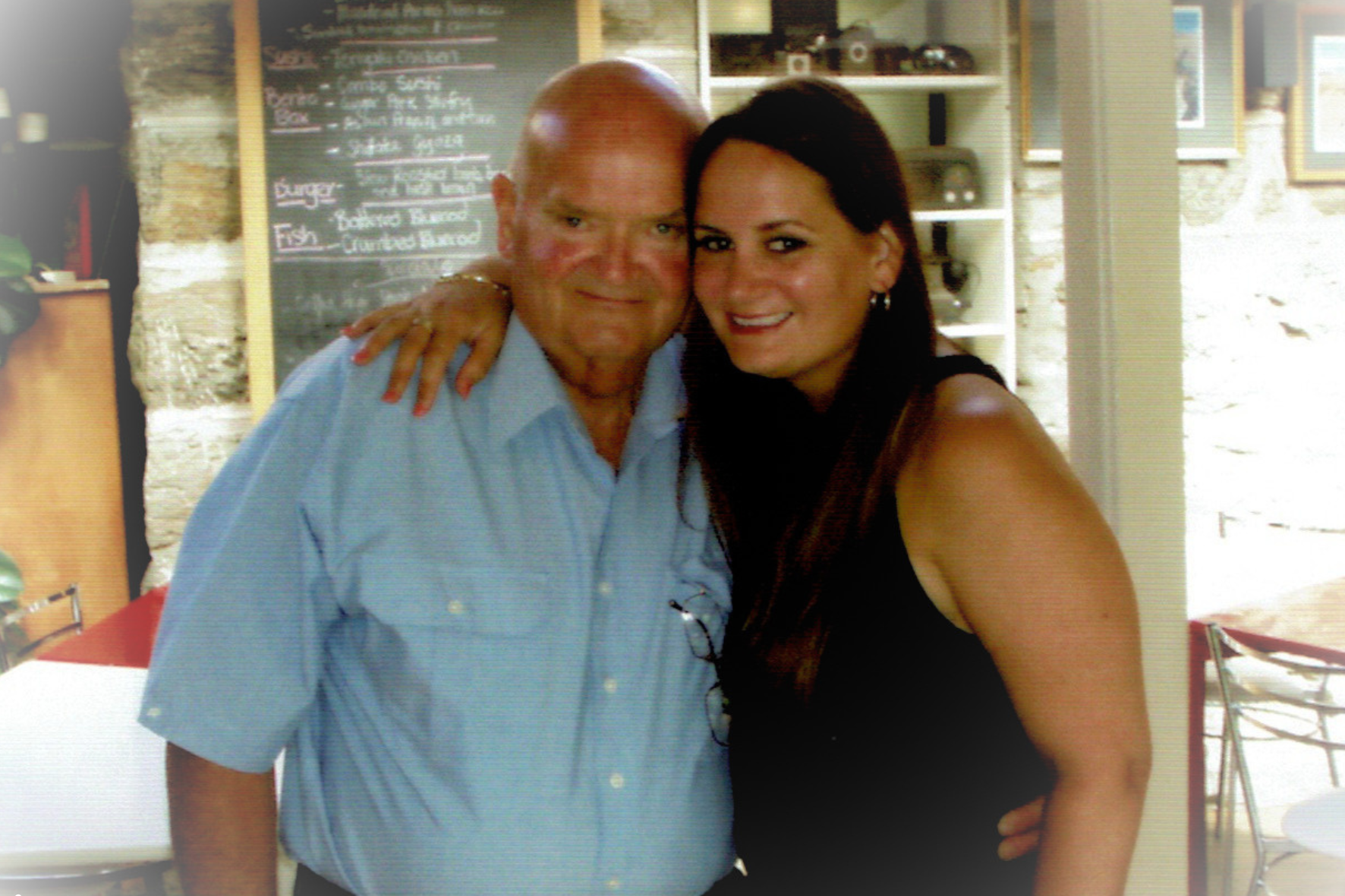
Eight years ago today, my dad passed away.
I'm not going to dress that up. It was one of the worst days of my life. And it was also, in the strangest, most unexpected way, the day that changed everything.
When I rang my best friend Ange and told her the news, she responded with something that stopped me completely.
"He would have made such a good grandad. And you would have made such a good mum."
I don't know why those words landed the way they did. Maybe because they were true. Maybe because I'd never let myself say them out loud. Maybe because grief has a way of cutting through every single layer of noise and getting right to the thing you've been avoiding. Maybe because the way she said it woke me up to the fact there was a very real chance I had already missed my opportunity.
I was almost 38 at the time, and had already been through years of infertility and loss with my ex-husband.
I came home that night after mulling it over with another friend at the pub (drinking was definitely my go to in terms of grief processing at that stage) and mentioned to mum that I might explore having a baby on my own.
She looked at me and said: "I was wondering if you were going to do that."
She had never said a word to me. Not once. It hadn't even been on my radar until that night. And yet apparently it was so obvious to the people who loved me most that they'd already had the thought and just... waited.
The clarity that grief gives you
I was seeing someone at the time. He already had two kids and had made it clear he didn't want more. And for reasons I can now barely understand, I had somehow talked myself into being okay with that. With being a stepmother. With that being enough.
Until my dad died, and the fog lifted.
Because suddenly I could see it very clearly: if I didn't take this into my own hands, there was a real chance I wasn't going to become a mum at all. And I wasn't willing to get to the end of my life and wonder what if. I wasn't willing to look back and realise I'd handed that decision to someone else — to circumstance, to timing, to a man who'd already decided for me.
Less than a month later, he ended things. The day before my birthday.
And honestly? It was the best thing he ever did for me.
Because I'd already made the decision. I'd already woken up the morning after my dad died and started taking action. I wasn't starting from scratch. I was already in motion.
What I did first
The very next morning — the morning after that pub conversation, the morning after I told my mum — I got up and increased my health insurance to gold cover.
That's it. That was my first step.
I knew I'd want a private obstetrician. I knew I'd likely have pregnancy anxiety given I'd had a previous loss. I knew I'd want that security. So I worked out the waiting period and I set my timeline from there.
I didn't do a huge amount of research at that point, honestly. I had friends going through IVF for a different reason — a genetic condition — and the husband was a GP who'd done all the homework. I just went with the same specialist they were using and assumed all fertility clinics had access to donors. That was my entire due diligence.
I gave myself about six months. I focused on saving as much as possible, because I genuinely didn't know what I'd qualify for or what it was going to cost. I had my first clinic appointment in November or December that year, just before Christmas.
And then I was in it.
What I'd tell you to do if you're standing where I was
Eight years on, I know what I'd do differently. Not because my path was wrong — it got me my daughter, who carries my dad's name in her middle name, and I would not change a single thing about that.
But if you're sitting with this idea right now — whether it was grief that put it there, or time, or a relationship that didn't work out, or just a quiet voice that's been getting louder — here's what I'd actually recommend you do first.
1. Research sperm donors earlier than you think you need to.
There are sperm shortages in Australia and every state has different regulations and clinics have differing levels of donor available. This is real and it affects timelines. The donor piece isn't something to leave until after everything else is sorted — it's something to start understanding now, because finding a donor that feels right for you takes time. Understand the difference between known donors and sperm banks. Understand what matters to you. Understand the legal implications and give yourself the space to think about it properly.
A great way to understand the pros and cons of all options is to join the Considering Solo Motherhood course - available in live group sessions over Zoom or on-demand so you can watch at your own pace.
2. Get your blood tests done. All of them.
Not just your AMH (though yes, definitely that). Your general health picture.
Iron. Vitamin D. Immunity checks — rubella, measles, etc. Thyroid. The things that, if they're low or off, can hold up your treatment once you've started. It is so much better to know about a low iron level or a missing immunity now, when you have time to fix it, than to find out at your first fertility appointment when you're raring to go and suddenly have to wait another three months.
Get a full pre-conception blood panel. Your GP can do this. Then get a referral to a fertility specialist to help you understand if you have the luxury of time to make this decision or should start taking some action now.
3. Sort your budget — even a rough one.
You don't need to know the exact number. You just need to start somewhere.
Look at your health insurance — what cover do you have? Does it cover IVF? What are the waiting periods? Medicare rebates exist for fertility treatment in Australia, but there are rules around what qualifies and when. Start understanding the landscape now, before you're in the middle of it and making decisions under pressure.
Even a rough savings target gives you something to work toward. It makes the whole thing feel more real and more possible.
4. Choose your fertility clinic based on their donor program first.
This is the one I'd do differently.
I chose my specialist based on a personal recommendation. And I was lucky — it worked out. But the most important thing, if you're going down the donor conception path nowadays, is the clinic's donor program. The availability of donors, and donors that fit your selection criteria (especially ethnicity).
Find the clinic with the donor program that suits your needs first. Then find the specialist within that clinic who is right for you — whose approach resonates, who you trust, who has experience with solo patients. But if the best specialist in the city is at a clinic with no suitable donors, they cannot give you a baby.
Clinic first. Specialist second.
5. Find your people.
This one isn't on anyone's official list and it should be.
The connections you make on this journey — women who are two steps ahead of you, women who are right alongside you, women who have already done what you're about to do and come out the other side — those connections are genuinely one of the most valuable things you can have.
This is not a single mum community. It's a solo mum community. The distinction matters. These are women who chose this, who planned this, who did the research and made the decision. They understand the specific texture of this experience and the implications of having a donor-conceived child, instead of a child whose parents aren’t together, in a way that general parenting communities simply don't.
If you're at the beginning, the Solo Mum Society Facebook group is a brilliant place to start. Free, real, full of women who have been where you are and will answer your weird and wonderful questions without judgement.
When you're ready to go deeper — when the idea is becoming a plan and you want structure, information and real connection — that's what the Bump membership is for. It's for women who are actively preparing, actively trying, and want to do this with a community around them rather than alone.
And the Considering Solo Motherhood course is there for when you're ready to actually understand what it is involved and help you work through your fears or anxieties with real-life experience, not hypotheticals based on the societal conditioning we’ve grown up in — join a group course via Zoom or watch on demand, at your own pace, with everything in one place.
You don't have to have it all figured out before you start talking to people. In fact, the earlier you find your community, the better.
The part I sit with on this day every year
My dad never got to meet my daughter.
I carry that. I will always carry that.
But I also know — and I know this as clearly as I know anything — that if he hadn't died, I might never have made this decision. The noise of everyday life, the relationship I was in, the slow comfortable drift of just seeing what happened... it might have carried me right past the window.
His death gave me clarity. And my daughter carries his name.
There is grief in that. And there is the deepest gratitude.
If you're in the maybe stage right now — if this is just an idea, if you're not sure, if you're waiting to see what happens — I want you to know something.
You don't have to wait for a moment of crisis to get clear.
You can decide now (or take action in parallel while you work this decision out).
Download the Solo Mum Society Clarity Guide — seven questions to help you work out where you actually stand, what's holding you back, and what your next step might be.
Already clear and ready to find your people? Come and join us in the free Facebook group — and when you're ready for something more, The Bump is waiting.
Join the free Facebook group →
Alisha x
---
Alisha is the founder of Solo Mum Society and a solo mum by choice. Her daughter was conceived via donor conception and was born in 2020.
#SoloMumByChoice #SoloMumSociety #Motherhood #ConsideringSoloMotherhood #SingleMumByChoice