
What Happens During IVF? A Plain-English Guide for Single Women
Because your clinic will give you a protocol. Nobody gives you the actual picture.
You have made the appointment. You have maybe even had the initial consultation. And somewhere between the abbreviations on the information sheet and the price list you are not quite ready to look at, you have realised that nobody has actually explained what IVF involves in plain terms.
Not what the success rates are. Not the medical terminology. The actual experience — what happens, in what order, what it feels like to be going through it on your own.
This is that explanation.
First — is IVF definitely what you need?
Not every solo mum starts with IVF. The pathway your clinic recommends will depend on your age, your AMH (a blood test that indicates ovarian reserve), your general health, and whether there are any other factors to consider.
Some women start with IUI — intrauterine insemination — which is simpler and less invasive. Donor sperm is placed directly into the uterus around the time of ovulation. It requires fewer medications, costs less per cycle, and may be recommended first if you are younger with good fertility indicators.
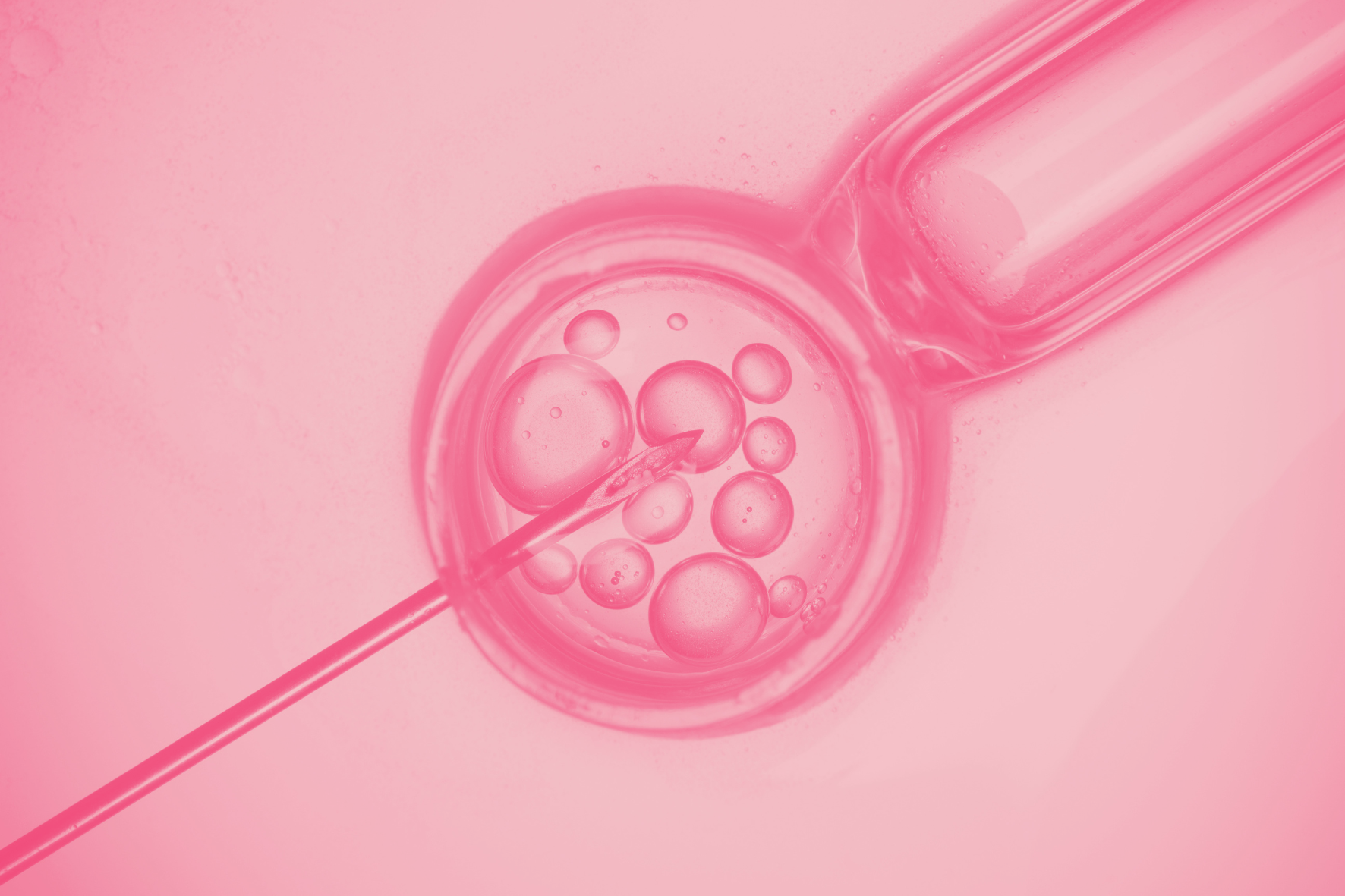
Others go straight to IVF — eggs are retrieved from your ovaries, fertilised with donor sperm in a lab, and the resulting embryo is transferred back into your uterus.
Your fertility specialist guides this. What matters right now is understanding what IVF actually involves — because knowing removes a lot of the fear.
The IVF cycle — step by step
A single IVF cycle typically takes four to six weeks from start to result.
Step 1: Baseline assessment (Cycle Day 2-3)
Before stimulation begins, your clinic does a baseline ultrasound and blood test on day two or three of your period. They are checking your hormone levels and the number of resting follicles in your ovaries, which helps them work out how to calibrate your medication. This is when your protocol is confirmed — your personalised medication plan for the cycle.
Step 2: Ovarian stimulation (approximately Days 2-12)
This is the injections phase.
You self-administer hormone injections daily — sometimes twice daily — for approximately ten to twelve days. These medications stimulate your ovaries to produce multiple follicles, each of which may contain an egg. Your clinic will give you detailed instructions, and it is more manageable than it sounds.
During this phase you will have several monitoring appointments — ultrasounds and blood tests every two to three days, or more frequently as you approach egg collection. These are typically early morning appointments that can appear on short notice.
Multiple medications. Different doses. Precise timing. Clinic appointments appearing in your calendar with little warning. This is where having everything tracked in one place makes a genuine difference — not just convenient, actually helpful when you are doing this without a partner to help you remember.
The free SMS IVF Cycle Tracker was built for exactly this. Enter your cycle day 1 and all your dates auto-fill. Track your medications, doses and timing. Mark your scans and blood tests. Keep notes. All in one place.
Download it below.
Step 3: The trigger injection
When your follicles reach the right size, you are given a trigger injection that prompts your eggs to mature. The timing of this injection is critical — egg collection happens exactly 36 hours later. Your clinic gives you a precise time to inject and a precise time to arrive. Set multiple alarms. This is not one to miss.
Step 4: Egg collection
Egg collection (also called egg retrieval or EPU/OPU — egg/ovum pick-up) is a day procedure under sedation. A needle is guided through the vaginal wall to retrieve the fluid from each follicle. You will not feel it — but you will feel the aftermath. Most women experience cramping and bloating for a day or two. Plan to rest.
Importantly you will need someone to drive you home from this appointment, due to the sedation you can’t drive yourself, and ideally that person stays with you just in case there are any complications once you are home.
The number of eggs collected varies enormously — some cycles produce two or three, others produce fifteen or more. Not all will be mature. Not all mature eggs will fertilise. Your clinic calls you the following day with a fertilisation report.
This call is harder than most people expect. The numbers almost always drop at each stage — eggs retrieved, then mature eggs, then fertilised eggs, then viable embryos. Knowing this in advance does not make it easy, but it does make it less shocking.
Going through that call alone is its own experience. Worth naming.
Step 5: Fertilisation and embryo development
After collection, your eggs are placed with donor sperm in the lab. Over the next three to five days, the embryos are monitored as they develop. The goal is a blastocyst — an embryo at the stage most likely to implant successfully.
Some cycles produce several blastocysts. Some produce one. Some produce none. Good quality blastocysts may be frozen for future transfer cycles. If you have a blastocyst ready now, you may proceed to fresh transfer.
Step 6: Embryo transfer
Transfer is a simple procedure — no sedation, similar to a cervical screening test. The embryo is guided through the cervix into the uterus using a fine catheter. You will be awake. Some clinics let you bring a support person. Many clinics allow you to see the transfer on a screen (it’s like a tiny speck of glitter), and you’ll often get a photo of the embryo transferred (baby’s first photo!).
After transfer, you go home and wait.
Step 7: The two week wait
Ten to fourteen days after transfer, you do a blood test to find out if the embryo has implanted.
This is the two week wait (TWW). And it is, for most women, the hardest part of the entire process. You will analyse every symptom. The urge to test early is almost irresistible. And you are doing all of this without a partner to share the obsessing with.
We will cover the two week wait properly in a future blog. For now: it is finite, and you will get through it.
What is different about doing this as a solo mum
Everything above applies to anyone going through IVF. Here is what is specifically different when you are doing it alone.
Every appointment, you are likely going by yourself. The monitoring scans, egg collection, transfer, the blood test, the results call. Some clinics handle this thoughtfully and are well set up for solo patients. Some are not. It is worth asking your clinic directly how they support patients who come to appointments without a partner — particularly for egg collection day.
You are managing all of this alongside a full life. Work, other responsibilities, the mental load of the whole journey, and the physical side effects of the medications — without anyone at home to share the load with.
And the emotional experience is specific. Not harder than going through this with a partner — different. The absence of someone to process it with in real time is its own thing. This is one of the most significant reasons the women who do best through treatment are those who have found their people — women who understand what this is like because they are living it too.
The Bump membership is exactly this. Women going through IVF and IUI right now, in real time, who get it in a way that nobody else in your life probably does.
If you are preparing to start treatment, the Expecting Solo course is designed specifically for solo mums — it covers pregnancy and early motherhood from the perspective of someone doing it without a partner. If you are in treatment right now, it is worth knowing what comes next. Available in a live group course via Zoom or on-demand.
This blog is for general educational purposes only. IVF protocols vary significantly between clinics, specialists and individual patients. Always follow the specific guidance of your fertility team.
Alisha Burns is the founder of Solo Mum Society and a solo mum by choice. Her daughter was conceived via donor conception and born in 2020. Solo Mum Society is Australia's leading community for women choosing solo motherhood by choice.